Previous Story
Dependance on tomato importation will lessen within next four months says Minister of Agric
Posted On 10 Jul 2026
Comment: Off
Tag: 2016, Burkina Faso, Eric Opoku, Ghana, import, John dumelo, john mahama, lessen, Minister of Agriculture, ndc, reduction, tomato
The Minister of Food and Agriculture, Eric Opoku, has stated that government interventions to boost local production of tomatoes will begin to yield visible results within the next four months, and assured Ghanaians that the country’s dependence on imported tomatoes will soon be over.
He explained that government had rolled out a number of interventions aimed at increasing domestic tomato production and reducing imports, particularly from neighbouring Burkina Faso.
“We have started working on that challenge, and we are bent on reversing that story. Within the next three (or) four months, the results will be out there for Ghanaians to testify,” he said.
Mr Opoku made the remarks yesterday when he appeared before Parliament’s Select Committee on Assurances.
Geographic Reference
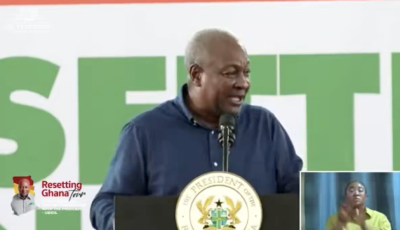
It was to provide updates on commitments made by President John Dramani Mahama in the 2025 State of the Nation Address (SONA).
Mr Opoku explained that the government was investing in irrigation infrastructure, including the construction of solar-powered boreholes, to ensure year-round cultivation of tomatoes in major production centres across the country.
He stressed that interventions undertaken regarding the subject included drilling boreholes, installing solar-powered pumps to irrigate farmlands, and fencing farms in areas prone to livestock intrusion to protect crops, adding that irrigation projects were underway in several tomato-growing areas across the country.
“President Mahama himself has taken special interest in this, and he says that we should bring an end to importation of tomatoes into this country, and we’ll do just that,” he stated.
Falling prices
Responding to concerns raised by the Chairman of the committee, Dominic Nitiwul, over falling food prices and the impact on farmers’ incomes, Mr Opoku acknowledged that while consumers were benefiting from cheaper food, many farmers were struggling to recover their production costs.
He described the situation as what agricultural economists referred to as “good-bad”, where abundant food production benefited consumers through lower prices but adversely affected farmers because increased supply depressed market prices.
“The bad-good is when there is shortage of food in the system, like we witnessed in 2024 because of the dry spell.
Then food prices started going up.
A lot of people were pushed into abject poverty because of the rising food prices.
“But the farmers who were able to produce little made a lot of money because of the rising prices.
So, for the farmers, it was good, but for the nation, it was bad.
Now we find ourselves as a nation in this situation.
I am a farmer. I am suffering.
But the nation is the beneficiary,” he said.
To address the situation, Mr Opoku said the government had, therefore, submitted proposals to President Mahama and Cabinet to cushion farmers against the effects of declining prices.
Executive Branch
As part of the measures under consideration, he disclosed that the government had settled on the provision of free fertiliser as an emergency intervention to sustain farmers’ interest in production while pursuing long-term solutions through agro-processing and the creation of reliable markets.
He cautioned that prolonged low prices without adequate support could discourage many people from farming, emphasising the need to expand processing and value addition to absorb excess produce and guarantee stable incomes for farmers.
Source: Graphic